Description
This ICD-10-CM course Congenital, Malformations, Deformations, and Chromosomal Abnormalities, presents an overview of chapter-specific coding guidelines and helpful tips for proper code selection for congenital conditions. Throughout this course, the discussion will cover common congenital anomalies, also known as birth defects, which are a leading cause of infant mortality or long-term disabilities in the United States. The learner will discover that congenital anomalies or malformations can affect almost every body organ or system.
Objectives:
Lesson 1: Coding Overview
- Recognize code categories in Chapter 17 of ICD-10-CM
- Properly sequence multiple codes according to coding guidelines
Lesson 2: Congenital Malformations of the Nervous System and Sense Organs
- Assign a code for Arnold-Chiari syndrome with Spina bifida
- Identify differences between coding for congenital and acquired eye conditions
Lesson 3: Circulatory, Respiratory Systems, and Cleft Lip/Palate
- Differentiate between patent ductus arteriosus and patent foramen ovale
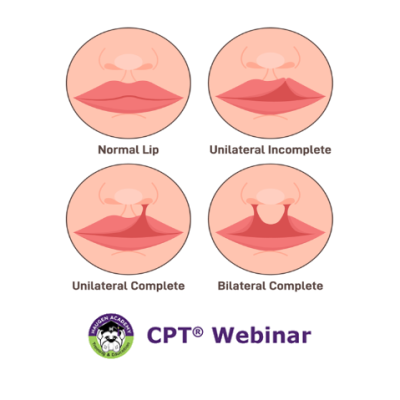
- Assign codes for cleft palate and cleft lip conditions
Lesson 4: Digestive and Genitourinary Systems
- Assign a code for Meckel’s diverticulum
- Differentiate between hypospadias and epispadias
Lesson 5: Musculoskeletal Malformations and Other Conditions
- Determine when to assign a code for fetal alcohol syndrome
- Assign a code for Down syndrome
Click here to view a quick lesson from the course on ICD-10-CM Coding Fetal Alcohol Syndrome and Down Syndrome.
Codes Discussed: Q00-Q99 (Congenital malformations, deformations, and chromosomal abnormalities), Z38 (Liveborn infants according to place of birth and type of delivery category), Z38.00 (Single liveborn infant, delivered vaginally), Z38.01 (Single liveborn infant, delivered by cesarean), Q36.1 (Median cleft lip), Q05 (Spina bifida category), Q05.7 (Lumbar spina bifida without hydrocephalus/lumbar meningocele), Q05.9 (Spina bifida, unspecified), Q76.0 (Spina bifida occulta), Q03 (Congenital hydrocephalus category), Q07 (Other congenital malformations of nervous system category/Arnold-Chiari type I or II category), Q07.00 (Arnold-Chiari syndrome without spina bifida or hydrocephalus), Q07.01 (Arnold-Chiari syndrome with spina bifida), Q07.02 (Arnold-Chiari syndrome with hydrocephalus), Q07.03 (Arnold-Chiari syndrome with spina bifida and hydrocephalus), Q01 (Encephalocele category/Arnold-Chiari type III), Q04.8 (Other specified congenital malformations of brain/Arnold-Chiari type IV), Q15.0 (Congenital glaucoma), H40 (Glaucoma category), Q20.3 (Discordant ventriculoarterial connection/transposition of great vessels), Q21.3 (Tetralogy of Fallot), Q21.0 (Ventricular septal defect), Q21.12 (Patent foramen ovale), Q24.8 (Other specified congenital malformations of heart), Q25.5 (Atresia of pulmonary artery), I51.7 (Cardiomegaly), Q22 (Congenital malformations of pulmonary and tricuspid valves category), Q22.6 (Hypoplastic right heart syndrome), Q23 (Congenital malformations of aortic and mitral valves category), Q23.0 (Congenital stenosis of aortic valve), Q23.4 (Hypoplastic left heart syndrome), Q35.7 (Cleft uvula), Q37 (Cleft palate with cleft lip category), Q37.0 (Cleft hard palate with bilateral cleft lip), Q43.0 (Meckel’s diverticulum), Q43.1 (Hirschsprung’s disease/congenital megacolon), Q51.3 (Bicornate uterus), Q51.21 (Complete septate uterus), Q53.9 (Undescended testicle, unspecified), Q53.111 (Unilateral intraabdominal testis, right side), Q53.10 (Unspecified undescended testicle, unilateral), K40.90 (Unilateral inguinal hernia, without obstruction or gangrene, not specified as recurrent), Q54 (Hypospadias category), Q64.0 (Epispadias), Q75 (Other congenital malformations of skull and face bones category), Q75.0 (Craniosynostosis category), Q75.022 (Craniosynostosis, bilateral coronal sutures), Q76.2 (Congenital spondylolisthesis), M43.10 (Spondylolisthesis, site unspecified), Q86.0 (Fetal alcohol syndrome), P04.3 (Newborn affected by maternal use of alcohol), Q90 (Down syndrome category), Q90.0 (Trisomy 21, meiotic nondisjunction), Q90.1 (Trisomy 21, mosaicism), Q90.2 (Trisomy 21, translocation), Q90.9 (Down syndrome, unspecified/Trisomy 21 NOS), G82.20 (Paraplegia, unspecified), G96.19 (Other disorders of meninges, not elsewhere classified), N17.9 (Acute kidney failure, unspecified), N18.3 (Chronic kidney disease, stage 3), Q60.3 (Renal hypoplasia, unilateral), Q60.4 (Renal hypoplasia, bilateral), Q60.5 (Renal hypoplasia, unspecified)
Topics Covered: ICD-10-CM congenital malformations coding, ICD-10-CM Chapter 17 coding, congenital deformations coding, chromosomal abnormalities coding, congenital anomaly guidelines, congenital conditions throughout life, newborn congenital anomaly coding, birth admission coding, liveborn infant sequencing, Z38 principal diagnosis coding, congenital anomaly secondary diagnosis coding, maternal record congenital code exclusion, congenital versus acquired conditions, alphabetic index main terms, congenital syndrome coding, coding syndromes by manifestations, Beckwith-Wiedemann syndrome indexing, birth defect causes, fetal development, chromosomes, autosomes, sex chromosomes, numerical chromosomal abnormalities, structural chromosomal abnormalities, neural tube defects, spina bifida coding, spina bifida occulta coding, congenital hydrocephalus coding, cerebrospinal fluid buildup, hydrocephalus shunt treatment, Arnold-Chiari syndrome coding, Chiari malformation coding, Arnold-Chiari with spina bifida coding, Arnold-Chiari with hydrocephalus coding, congenital glaucoma coding, acquired glaucoma coding, fetal heart development, congenital heart defect coding, transposition of the great vessels coding, discordant ventriculoarterial connection, ventricular septal defect coding, atrial septal defect coding, patent foramen ovale coding, atrioventricular septal defect coding, atrioventricular canal defect, Tetralogy of Fallot coding, pulmonary valve stenosis, dextroposition of aorta, right ventricular hypertrophy, congenital valve disease coding, pulmonary valve malformation, tricuspid valve malformation, aortic valve malformation, mitral valve malformation, patent ductus arteriosus coding, PDA versus PFO coding, cleft lip coding, cleft palate coding, cleft uvula coding, bilateral cleft lip coding, hard palate cleft coding, soft palate cleft coding, pyloric stenosis coding, congenital pyloric stenosis, infantile pyloric stenosis, projectile vomiting integral symptom coding, Meckel’s diverticulum coding, congenital diverticulitis coding, Hirschsprung’s disease coding, congenital megacolon coding, aganglionosis coding, Mullerian duct malformations, bicornuate uterus coding, septate uterus coding, infertility with uterine anomaly, undescended testicle coding, cryptorchidism coding, ectopic testis coding, intraabdominal testis coding, hypospadias coding, epispadias coding, congenital genital organ malformations, congenital musculoskeletal malformations, congenital hip malformations, congenital foot malformations, congenital finger malformations, congenital toe malformations, congenital limb absence coding, craniosynostosis coding, skull suture fusion coding, congenital spondylolisthesis coding, acquired spondylolisthesis coding, fetal alcohol syndrome coding, newborn affected by maternal alcohol use coding, Down syndrome coding, trisomy 21 coding, mosaic Down syndrome coding, nonmosaic Down syndrome coding, translocation Down syndrome coding, intellectual disability with Down syndrome, associated physical conditions with Down syndrome, congenital atrophic kidney coding, renal hypoplasia coding, Code Purple practice, Code Red assessment, congenital anomaly coding scenarios




terrific- surgery for these anomalies should be in a presentation
engaging
Transcription notes
Great information. Thank you
Take out the cartoon characters
Great overview of ICD-10-CM coding for congenital malformations, deformations, and chromosomal abnormalities
I love coding!
It was a little challenging to follow along with the speaker
EXCELLENT
I hope I will be able to review the information for later use. This was a great learning tool. Thank you.
good course
I thoroughly enjoyed the course and learned a lot. Easy to understand and clarified several diagnosis regarding congenital versus acquired problems.
wish I had more time to explore concepts using the internet as enhancement (we must complete these on-the-clock)