Description
This ICD-10-CM course Injury, Poisoning, and Other External Causes (Trauma), presents an overview of codes that report accidents, assaults, and other external causes of injuries and illness. This course covers VWXY codes, the structure and format of Chapter 20 codes, and the opportunity to apply these codes to case scenarios.
Objectives:
Lesson 1: Medical Terminology and Anatomy
- Differentiate between body planes
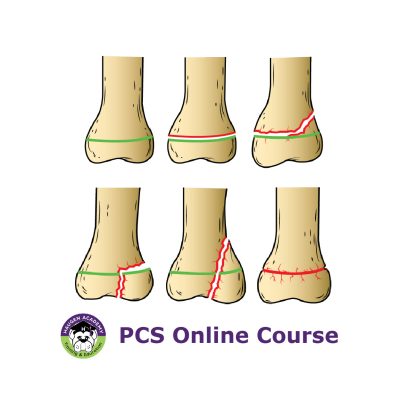
- Identify the different parts of a long bone
- Identify certain fractures as open vs. closed or displaced vs. nondisplaced
Lesson 2: General Code Format and Conventions
- Select the 7th character of episode of care for individual case scenarios
- Assign the first character of codes for injuries of specific body parts
Lesson 3: ICD-10-CM Coding for Trauma
- Apply category-specific seventh character extensions to fracture codes
- Differentiate between burns and corrosions in the ICD-10-CM classification
Lesson 4: Poisonings, Adverse Effects, and Underdosings
- Identify whether a patient had a poisoning, adverse effect, or underdosing based on the sixth character
- Describe when an underdosing code is used
View a quick lesson from this course covering Excludes1 and Excludes2.
Codes Discussed: A00-T88.9 (Codes used with external cause codes), Z00-Z99 (Factors influencing health status and contact with health services), V00-Y99 (External causes of morbidity code range), W18.01XA (Striking against sports equipment with subsequent fall, initial encounter), W18.01XD (Striking against sports equipment with subsequent fall, subsequent encounter), W18.01XS (Striking against sports equipment with subsequent fall, sequela), W00-W19 (Slipping, tripping, stumbling, and falls code block), Y90-Y99 (Supplementary factors related to causes of morbidity classified elsewhere), Y92 (Place of occurrence category), Y92.9 (Unspecified place or not applicable), Y92.0 (Home as place of occurrence category), Y93 (Activity category), Y99 (External cause status category), Y99.9 (Unspecified external cause status), X99.1 (Assault by knife category), X99.1XXA (Assault by knife, initial encounter), V00-V99 (Transport accident code range), V40-V49 (Car occupant injured in transport accident code block), W00-X58 (Other external causes of accidental injury code range), X71-X83 (Intentional self-harm code range), X92-Y09 (Assault code range), T74 (Adult and child abuse, neglect, and other maltreatment category), Y07 (Perpetrator of assault, maltreatment, and neglect category), Y21-Y33 (Event of undetermined intent code range), Y35-Y38 (Legal intervention, operations of war, military operations, and terrorism code range), Y90 (Evidence of alcohol involvement determined by blood alcohol level category), F10 (Alcohol-related disorders category), Y90.4 (Blood alcohol level of 80-99 mg/100 ml), Y95 (Nosocomial condition), W26.0XXD (Contact with knife, subsequent encounter), W26.0XXS (Contact with knife, sequela), Y92.511 (Restaurant or café as place of occurrence), Y93.G3 (Activity, cooking and baking), Y99.0 (Civilian activity done for income or pay), X99.1XXA (Assault by knife, initial encounter), Y92.481 (Parking lot as place of occurrence), Y93.C2 (Activity, hand held interactive electronic device), X03.0XXA (Exposure to flames in controlled fire, not in building or structure, initial encounter), Y92.017 (Patio of single-family private house as place of occurrence), Y93.G2 (Activity, grilling and smoking food), Y99.8 (Other external cause status), W21.04XA (Struck by golf ball, initial encounter), W21.9XXA (Striking against or struck by unspecified sports equipment, initial encounter), Y92.39 (Other specified sports and athletics area as place of occurrence), Y93.53 (Activity, golf), V57.6XXA (Passenger in pick-up truck or van injured in collision with fixed or stationary object in traffic accident, initial encounter), V57.9A (Invalid transport accident code), V89.2XXA (Person injured in unspecified motor-vehicle accident, traffic, initial encounter), Y92.410 (Street and highway as place of occurrence), S01.01XA (Laceration without foreign body of scalp, initial encounter), V83.5XXA (Driver of special industrial vehicle injured in traffic accident, initial encounter), V83.5 (Invalid/incomplete forklift accident code), Y92.512 (Hardware store as place of occurrence), F10.129 (Alcohol abuse with intoxication, unspecified), V83.9 (Invalid/incomplete special industrial vehicle accident code), V54.5XXA (Driver of pick-up truck or van injured in collision with heavy transport vehicle or bus in traffic accident, initial encounter), V57.0XXA (Driver of pick-up truck or van injured in collision with fixed or stationary object in traffic accident, initial encounter), V53.0XXA (Driver of pick-up truck or van injured in collision with car, pick-up truck, or van in traffic accident, initial encounter), V73.5XXA (Bus occupant injured in collision with heavy transport vehicle or bus in traffic accident, initial encounter), W54.0XXA (Bitten by dog, initial encounter), W09.0XXA (Fall on or from playground slide, initial encounter), W09.8XXA (Fall on or from other playground equipment, initial encounter), Y92.038 (Other place in apartment as place of occurrence), Y93.89 (Other activity), Y07.528 (Other nursing staff as perpetrator of maltreatment and neglect), Y92.122 (Nursing home as place of occurrence)
Topics Covered: ICD-10-CM external cause coding, ICD-10-CM Chapter 20 coding, external causes of morbidity, V codes, W codes, X codes, Y codes, external cause add-on codes, external cause code sequencing, external cause code hierarchy, cause of injury coding, intent coding, place of occurrence coding, activity coding, external cause status coding, episode of care coding, external cause seventh character, initial encounter external cause coding, subsequent encounter external cause coding, sequela external cause coding, placeholder X coding, external cause of injuries index, alphabetic index external cause coding, tabular verification, external cause reporting guidelines, external cause documentation requirements, injury circumstance coding, injury intent documentation, child abuse external cause hierarchy, adult abuse external cause hierarchy, terrorism external cause coding, cataclysmic event external cause coding, transport accident external cause coding, activity and status sequencing, combination external cause codes, sequential event injury coding, fall after striking object coding, slipping tripping stumbling and falls coding, strenuous activity external cause coding, nosocomial infection external cause coding, smoke inhalation external cause coding, forest fire exposure coding, what why where how who when external cause framework, place of occurrence codes, home place of occurrence coding, parking lot place of occurrence coding, restaurant place of occurrence coding, hardware store place of occurrence coding, street and highway place of occurrence coding, nursing home place of occurrence coding, golf course place of occurrence coding, patio place of occurrence coding, playground place of occurrence coding, activity codes, cooking activity coding, grilling activity coding, golf activity coding, electronic device activity coding, playing activity coding, external cause status codes, work status coding, civilian work activity coding, leisure activity coding, recreational activity coding, transport accident definitions, vehicle accident coding, car accident coding, SUV accident coding, pickup truck accident coding, minivan accident coding, forklift accident coding, bus collision coding, collision with stationary object, noncollision transport accident, traffic accident coding, intentional self-harm coding, suicide attempt external cause coding, assault external cause coding, assault by knife coding, perpetrator coding, adult and child neglect coding, undetermined intent coding, accidental intent default, suspected abuse coding, legal intervention coding, operations of war coding, military operations coding, terrorism coding, blood alcohol level coding, alcohol involvement coding, blood alcohol concentration conversion, nosocomial condition coding, healthcare-associated infection coding, external cause code red assessment, external cause code purple practice, ICD-10-CM external cause scenarios



engaging
Great and easy to follow
Great course with very helpful information and assistance of the OCG.
Love the New to 2025 information that was easy to find.
The course focused more on anatomy than coding that I had expected
Great refresher.
Thank you for the helpful education
A PDF code book attached to the software would be great
GOOD
This course was very useful and explained everything well.
This course provided information never before explained in any other courses I have taken in the past.