Codes Discussed: ICD-10-PCS (International Classification of Diseases, 10th Revision, Procedure Coding System), ICD-10-CM (diagnosis coding system referenced in Coding Clinic title), CPT (referenced as resource/procedure terminology contrast), HCPCS (referenced as resource/procedure terminology contrast), PCS Medical/Surgical section, 31 Medical/Surgical root operations, 14 root operations covered in this course, Excision value B (Cutting out or off, without replacement, a portion of a body part), Resection value T (Cutting out or off, without replacement, all of a body part), Detachment value 6 (Cutting off all or part of the upper or lower extremities), Destruction value 5 (Physical eradication of all or a portion of a body part by direct use of energy, force, or destructive agent), Extraction value D (Pulling or stripping out or off all or a portion of a body part by force), Drainage value 9 (Taking or letting out fluids and/or gases from a body part), Extirpation value C (Taking or cutting out solid matter from a body part), Fragmentation value F (Breaking solid matter within a body part into pieces), Division value 8 (Cutting into a body part without draining fluids or gases to separate or transect a body part), Release value N (Freeing a body part from abnormal physical constraint by cutting or force), Transplantation value Y (Putting in or on living body part from another individual or animal to take the place and/or function of a similar body part), Reattachment value M (Putting back in or on all or a portion of a separated body part), Transfer value X (Moving all or part of a body part to another location to take over function while remaining connected to vascular and nervous supply), Reposition value S (Moving all or part of a body part to normal or suitable location), Qualifier value X (Diagnostic qualifier for biopsy-type procedures), Approach value 7 (Via Natural or Artificial Opening, referenced for D&C), 0BTJ (first four PCS characters for resection of left lower lung lobe), 0ZZ (characters 5-7 for open removal of left lower lung lobe with no device and no qualifier), 0W9 (PCS table for drainage of peritoneal cavity/abdominocentesis), 0W9G3ZZ (Percutaneous drainage of peritoneal cavity, no device, no qualifier), 01N (Release table for peripheral nervous system), 01N50ZZ (Open release of median nerve/carpal tunnel release, no device, no qualifier), 0QSM04Z (Open reposition of left tarsal with internal fixation device, no qualifier), 0DB (Gastrointestinal System Excision table referenced for polypectomy), 0 (Open approach value), 3 (Percutaneous approach value), 4 (Percutaneous endoscopic approach value), Z (No device/no qualifier value), Coding Clinic for ICD-10-CM/PCS 4th Quarter 2013 (Fragmentation inherent to Extirpation guidance), ESWL (Extracorporeal shock wave lithotripsy), D&C (Dilation and curettage), LITT (Laser interstitial thermal therapy referenced in course resources/context), ACP (not applicable; no ACP content covered in this file), Root Operation Replacement (referenced as future-course comparison for artificial heart, joint replacement, intraocular lens replacement, and non-Transplantation tissue/device scenarios), Root Operation Transfusion (referenced as correct root operation for bone marrow transplant rather than Transplantation)
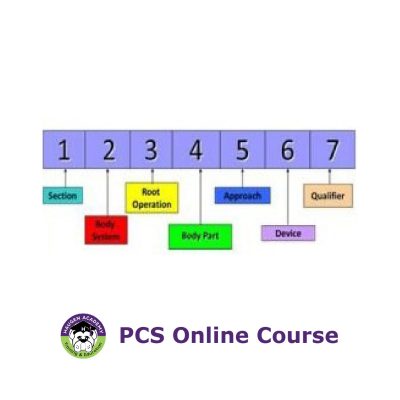
Topics Covered: ICD-10-PCS root operations, Root Operations Part 1, Medical/Surgical root operations, ICD-10-PCS code assignment, PCS root operation selection, PCS root operation categories, intent of procedure, reason procedure is performed, seven-character PCS code format, section character, body system character, root operation character, body part character, approach character, device character, qualifier character, ICD-10-PCS table use, ICD-10-PCS index use, PCS values, procedure objective, root operations that take out some or all of a body part, root operations that take out solids fluids or gases from a body part, root operations involving cutting or separation only, root operations that put in put back or move some or all of a body part, root operations that alter diameter or route of tubular body part, root operations that always involve a device, root operations involving examination only, root operations defining other repairs, root operations defining other objectives, Excision coding, Resection coding, Excision versus Resection, biopsy coding in PCS, diagnostic qualifier, liver biopsy, partial nephrectomy, wedge resection of lung, lymph node excision, parietal lobe tumor removal, total nephrectomy, total lobectomy, axillary lymph node chain removal, tonsillectomy, adenoidectomy, gastric pylorus resection, body part values in PCS, anatomical subdivision coding, lung lobe body part values, right middle lobe lung resection, skin excision, removal of lung tissue, lobectomy coding, pneumonectomy coding, lung wedge resection coding, lung segmentectomy coding, Detachment coding, upper extremity amputation coding, lower extremity amputation coding, ear excision versus detachment distinction, extent of detachment, low detachment, mid detachment, high detachment, partial detachment, complete detachment, ray amputation, finger ray, toe ray, metacarpal detachment, metatarsal detachment, above-knee amputation, shoulder disarticulation, thumb detachment, metacarpophalangeal joint detachment, humerus midshaft amputation, Destruction coding, tissue eradication, no tissue remains, no pathology report expectation, fulguration, electrical fulguration, electrocautery, chemical cautery, cryoablation, cryocautery, coblation, radiofrequency ablation, tonsil and adenoid coblation, actinic keratosis cryosurgery, destructive agent coding, Extraction coding, pulling or stripping tissue by force, tooth extraction, dilation and curettage, D&C approach, endometrial contents extraction, curette instrument, vein stripping, bone marrow biopsy, endometrial biopsy, suction biopsy, intraocular lens removal without replacement, non-excisional debridement, Drainage coding, fluid and gas removal, drainage biopsy coding, incision and drainage, I&D coding, centesis coding, thoracentesis, Foley catheter placement, bladder drainage, endoscopic sinus drainage, Extirpation coding, solid matter removal, blood clot removal, arterial plaque removal, calculus removal, ear wax removal, foreign body removal, tubular body part lumen, thrombectomy, choledocholithotomy, bile duct stone removal, retained suture removal, infected foreign body removal, Fragmentation coding, breaking solid matter into pieces, lithotripsy coding, extracorporeal shock wave lithotripsy, manual fragmentation, ultrasonic fragmentation, stone fragmentation, ureteroscopic lithotripsy, intravascular ultrasound-assisted thrombolysis, fallopian tube calcification lithotripsy, fragmentation inherent to extirpation, lithotripsy with removal of pieces, Division coding, cutting to separate or transect body part, -otomy procedures, body part being cut, spinal cordotomy, pain control procedure coding, intractable pain, facet rhizotomy, nerve pathway division, nerve root division, Release coding, freeing body part from abnormal constraint, body part being freed, adhesiolysis coding, adhesion release, abdominal adhesions, joint capsule adhesions, ureter adhesiolysis, carpal tunnel release, median nerve release, scar contracture release, finger contracture release, elbow contracture release, shoulder contracture release, frenulotomy, tongue release, trigger finger tenovaginotomy, tendon sheath incision, flexor tendon release, Transplantation coding, living body part transplant, organ transplant coding, kidney transplant, heart transplant, thymus transplant, stomach transplant, native organ not removed, transplanted organ function, allowable transplantation body parts, transplant versus replacement, bone marrow transplant transfusion distinction, artificial heart replacement distinction, joint replacement distinction, Reattachment coding, traumatic amputation reattachment, finger reattachment, hand reattachment, foot reattachment, tooth reattachment, internal organ avulsion, avulsed body part reattachment, Transfer coding, moving body part to take over another body part’s function, vascular supply maintained, nervous supply maintained, tendon transfer, extensor indicis proprius transfer, extensor pollicis longus rupture, skin pedicle flap, free skin graft distinction, Z-plasty, TRAM flap, transverse rectus abdominis muscle flap, breast reconstruction flap, myocutaneous flap closure, index finger to thumb transfer, Reposition coding, moving body part to normal or suitable location, transfer versus reposition, undescended testicle reposition, fracture reduction, displaced fracture coding, fixation to correct location, -pexy procedures, gastropexy, biceps tenodesis, vaginal cuff suspension, uterosacral ligament suspension, laparoscopic suspension of vagina, PCS Code Purple practice, PCS Code Red challenge, Excision single lymph node, lumpectomy, removal of skin tag, liver biopsy, Resection lymph node chain, hysterectomy, total mastectomy, detachment ray definition, high/mid/low extremity detachment levels, partial versus complete foot detachment, extirpation versus fragmentation, fragmentation not separately coded with extirpation, left ureter stone lithotripsy with ureteroscopic removal, abdominocentesis, peritoneal cavity drainage, fasciotomy with median nerve release, carpal tunnel release common name, open approach through skin subcutaneous tissue and fascia, left tarsal fracture reduction, internal fixation device, plate and screw fixation, sigmoidoscopy with sigmoid polypectomy, gastrointestinal polypectomy, lacrimal duct stone removal, root operation definition matching, PCS code building education, ICD-10-PCS inpatient procedure coding education, medical coding course content




very easy to follow
Explained very well. Great refresher and updated information.
I still have no idea how to move around or search or how to get from the root operations to the tables using the pcs download from the resources. There should be a course on that!
engaging
The course was very interesting and informative.
I really liked this course! It was very informative and user friendly!
Loved the course! Helped clear up any confusion I may have had with the root operations presented in this module.
Very informative and interesting. I would recommend this course.
I love the puppy pictures when answering questions. It has made this fun.
Excellent
THE INSTRUCTOR HAS A WONDERFUL SENCE OF HUMOR MAKING THE LESSON FUN.
Great course for learning root operations