Codes Discussed: ICD-10-PCS (International Classification of Diseases, 10th Revision, Procedure Coding System), 2026 ICD-10-PCS, ICD-10-PCS Official Guidelines for Coding and Reporting, Medical and Surgical section, Mouth and Throat body system, Gastrointestinal System body system, Hepatobiliary System and Pancreas body system, General Anatomical Regions body system, Endocrine and Lymphatic systems (incorrect answer choice for GI body systems), Integumentary System (incorrect answer choice for GI body systems), 0C tables (Mouth and Throat body system), 0CP table (Mouth and Throat Removal table/device removal distinction), 0W3 table (Control of Oral Cavity and Throat/post-tonsillectomy hemorrhage control), Body Part Key, PCS Guideline B5.3a (External approach for procedures within an orifice on visible structures without instrumentation), PCS Guideline B5.2a (Open approach with percutaneous endoscopic assistance coded to Open), PCS Guideline B.84 (Lower intestinal tract organs), Root Operation Alteration, Root Operation Repair, Root Operation Supplement, Root Operation Introduction, Root Operation Extirpation, Root Operation Removal, Root Operation Resection, Root Operation Destruction, Root Operation Excision, Root Operation Control, Root Operation Inspection, Root Operation Extraction, Root Operation Reposition, Approach value External, Approach value Open, Approach value Percutaneous, Approach value Percutaneous Endoscopic, Approach value Via Natural or Artificial Opening Endoscopic, Device value Synthetic Substitute, Qualifier Diagnostic, 0CTPXZZ (Resection of tonsils, external approach/complete tonsillectomy), 0CTQXZZ (Resection of adenoids, external approach/complete adenoidectomy), 0CTP0ZZ (Incorrect answer choice because tonsils are accessible without instrumentation and approach should be External), 0CTQ0ZZ (Incorrect answer choice because adenoids are accessible without instrumentation and approach should be External), 0CBPXZZ (Incorrect answer choice when tonsils are completely removed; Excision would be partial removal), 0CBQXZZ (Incorrect answer choice when adenoids are completely removed; Excision would be partial removal), 0CBNXZZ (Incorrect answer choice in UPPP scenario because uvula/soft palate were not removed), 0CDWXZ0 (Extraction of upper tooth, external approach, all/tooth #4 surgical extraction), 0CDXXZ0 (Incorrect answer choice because tooth #4 is not a lower tooth), 0CTW0Z0 (Incorrect answer choice because tooth was not removed by cutting), 0CBWXZ0 (Incorrect answer choice because tooth was not removed by cutting), 0C00XJZ (Alteration of upper lip with synthetic substitute, external approach/Gore-Tex implant for cosmetic upper lip augmentation), 0CQ4XZZ (Repair of buccal mucosa, external approach/inside upper lip laceration repair), 0CQ0XZZ (Repair of upper lip, external approach/plastic repair of upper lip laceration), 0CQ40ZZ (Incorrect answer choice because no incision was made for buccal mucosa repair), 0CQ00ZZ (Incorrect answer choice because body part/approach did not match buccal mucosa repair), 0CCM8ZZ (Extirpation of matter from pharynx via natural or artificial opening endoscopic/food bolus removed from oropharynx), 0W33XZZ (Control of oral cavity and throat, external approach/post-tonsillectomy hemorrhage cauterization), 0W337ZZ (Incorrect answer choice because no instrumentation was used), 0C5M7ZZ (Incorrect answer choice because procedure intent was bleeding control, not destruction), 0W330ZZ (Incorrect answer choice because no open incision was made), 0CDV8ZZ (Extraction of left vocal cord via natural or artificial opening endoscopic/vocal cord stripping), 0CBT8ZX (Excision of right vocal cord via natural or artificial opening endoscopic, diagnostic/right vocal cord biopsy), 0CBV8ZX (Excision of left vocal cord via natural or artificial opening endoscopic, diagnostic/left vocal cord biopsy), 0CBM8ZX (Excision of pharynx via natural or artificial opening endoscopic, diagnostic/base of tongue biopsy per Body Part Key), 0CBM8ZZ (Incorrect answer choice because tongue/base of tongue excision was performed for biopsy and needed diagnostic qualifier), 0CBV8ZZ (Incorrect answer choice because left true vocal cord was stripped, not excised), 0CB7XZX (Incorrect answer choice because base of tongue requires Body Part Key lookup to pharynx), 0CBM7ZX (Excision of pharynx via natural or artificial opening, diagnostic/base of tongue biopsy answer text conflict), 0CJS8ZZ (Inspection of larynx via natural or artificial opening endoscopic/direct laryngoscopy), 0CSNXZZ (Reposition of uvula, external approach/UPPP uvula folded and sutured onto soft palate), 0CTNXZZ (Incorrect answer choice because uvula was not resected), 0CQNXZZ (Incorrect answer choice because uvula was repositioned rather than repaired/resected), 0CS20ZZ (Incorrect answer choice because hard palate was not operated on), 0CB3XZZ (Incorrect answer choice because soft palate was not removed), PCS body part Oral Cavity and Throat, PCS body part Pharynx, PCS body part Upper Lip, PCS body part Buccal Mucosa, PCS body part Upper Teeth, PCS body part Lower Teeth, PCS body part Tonsils, PCS body part Adenoids, PCS body part Soft Palate, PCS body part Hard Palate, PCS body part Uvula, PCS body part Vocal Cord, PCS body part Base of Tongue, PCS body part Parotid Gland, PCS body part Sublingual Gland, PCS body part Submandibular Gland, PCS body part Liver, PCS body part Gallbladder, PCS body part Pancreas, PCS body part Left Hepatic Duct, PCS body part Right Hepatic Duct, PCS body part Common Hepatic Duct, PCS body part Cystic Duct, PCS body part Common Bile Duct, PCS body part Pancreatic Duct, PCS body part Ampulla of Vater, PCS body part Sphincter of Oddi, qualifier value 3 (Vertical in GI Excision; Laser Interstitial Thermal Therapy in GI Destruction; Duodenum in Hepatobiliary Bypass), qualifier value 4 (Cutaneous in GI; Stomach in Hepatobiliary), qualifier value 6 (Stomach in GI), FESS not applicable to this course, UPPP (Uvulopalatopharyngoplasty), UVPP (Uvulopalatopharyngoplasty acronym variant), CPAP (Continuous Positive Airway Pressure), ED (Emergency Department), OR (Operating Room), ENT (Ear, Nose, and Throat), GI (Gastrointestinal), CBD (Common Bile Duct), Gore-Tex implant, Gore-Tex, Alloderm sheet, collagen, injectable bovine collagen, lidocaine, epinephrine, Betadine, bacitracin, amoxicillin, Marcaine, Coblation Wand, suction cautery, MacGyver retractor, laryngoscope, operating microscope, #45 laryngeal forceps, topical adrenaline, Medrol DOSEPAK, Tylenol with Codeine, Elixir, cup forceps, epinephrine-impregnated cottonoid pledgets, PDS suture, Vicryl suture, Monocryl suture, chromic sutures, bayonet forceps, periosteal elevator, straight elevator, endotracheal anesthesia, papoose restraint
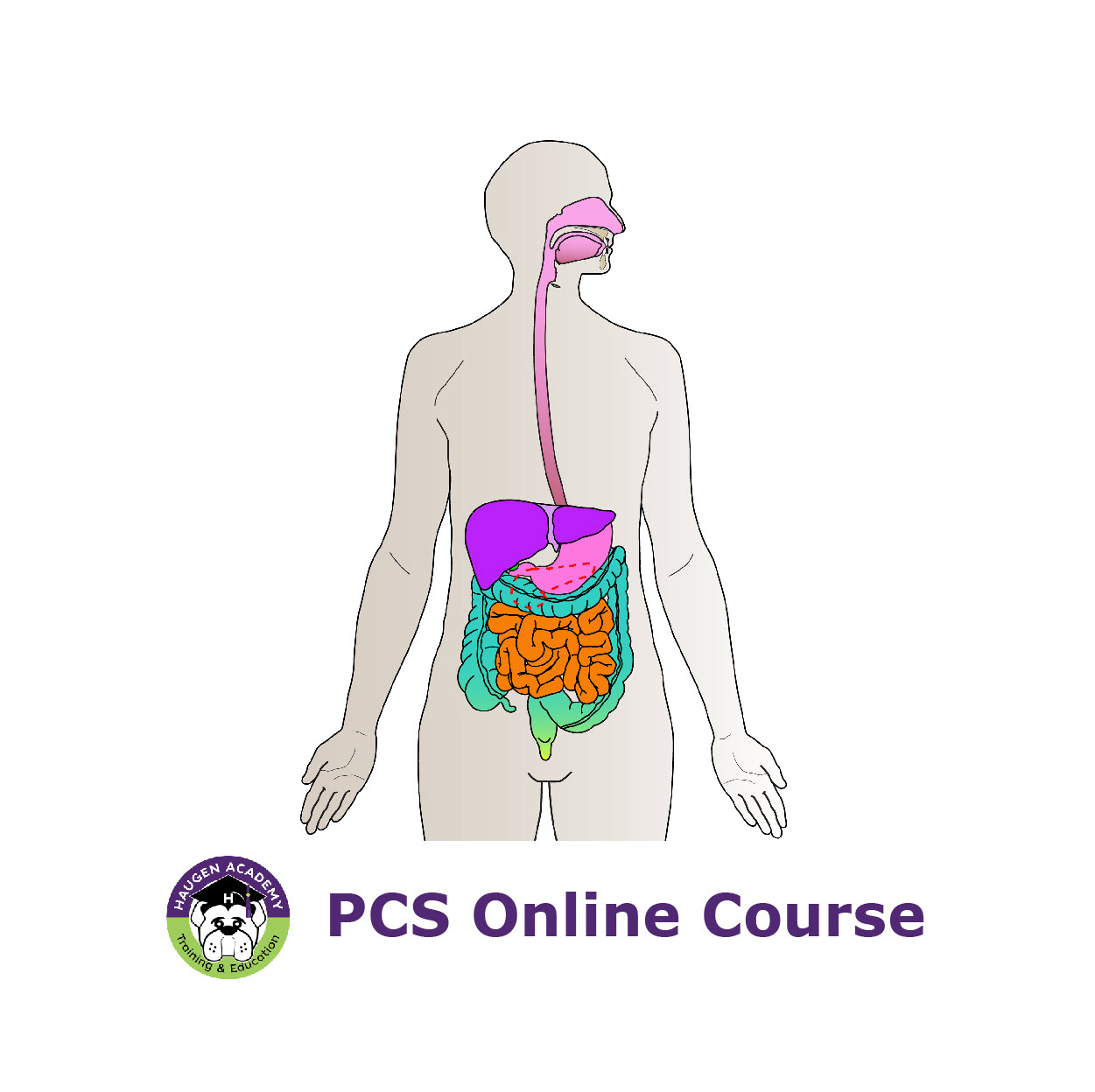
Topics Covered: ICD-10-PCS gastroenterology service line Part 1, ICD-10-PCS GI procedure coding, gastrointestinal system procedure coding, hepatobiliary system procedure coding, pancreas procedure coding, mouth and throat procedure coding, GI anatomy for PCS coding, gastrointestinal anatomy, hepatobiliary anatomy, pancreatic anatomy, alimentary canal anatomy, accessory digestive organs, digestive system function, digestion, absorption, metabolism, mechanical digestion, chemical digestion, alimentary canal, GI tract, continuous digestive tube, oral cavity, pharynx, esophagus, stomach, small intestine, large intestine, anus, teeth, tongue, gallbladder, salivary glands, liver, pancreas, saliva secretion, bile secretion, digestive enzyme secretion, mouth anatomy, throat anatomy, tongue anatomy, soft palate, hard palate, uvula, pharynx, epiglottis, trachea protection during swallowing, esophagus, frenula, gingiva, gums, tonsils, adenoids, nasopharynx, salivary gland anatomy, parotid gland, sublingual gland, submandibular gland, salivary ducts, buccal mucosa, through-and-through lip laceration, tooth numbering, permanent teeth numbering, primary teeth lettering, deciduous teeth, upper teeth coding, lower teeth coding, tooth extraction body part selection, upper intestinal tract, lower intestinal tract, PCS upper intestinal tract guideline, PCS lower intestinal tract guideline, esophagus sections, cervical esophagus, thoracic esophagus, abdominal esophagus, gastroesophageal junction, cardiac sphincter, stomach fundus, stomach body, pylorus, pyloric sphincter, lesser curvature, greater curvature, duodenum, jejunum, ileum, cecum, ascending colon, transverse colon, descending colon, sigmoid colon, rectum, anus, liver anatomy, right liver lobe, left liver lobe, liver blood filtering, drug metabolism, toxin removal, blood clotting proteins, gallbladder anatomy, bile storage, hepatobiliary duct anatomy, left hepatic duct, right hepatic duct, common hepatic duct, cystic duct, common bile duct, CBD, pancreatic duct, ampulla of Vater, sphincter of Oddi, endocrine pancreas, exocrine pancreas, insulin secretion, digestive enzymes, peritoneum anatomy, parietal peritoneum, visceral peritoneum, peritoneal cavity, mesentery, mesocolon, greater omentum, lesser omentum, abdominal infection barrier, GI code structure, PCS code format, seven PCS characters, section character, body system character, root operation character, body part character, approach character, device character, qualifier character, four GI-related body systems, Medical and Surgical section structure, GI body system selection, GI root operation values, hepatobiliary root operation values, mouth and throat root operation values, General Anatomical Regions root operation values, anatomical region versus specific body part coding, GI approach selection, external approach, open approach, percutaneous approach, percutaneous endoscopic approach, via natural or artificial opening endoscopic approach, open procedure with percutaneous endoscopic assistance, incision extension during percutaneous endoscopic approach, GI device values, drainage device across GI body systems, GI qualifier values, hepatobiliary qualifier values, mouth and throat unique qualifiers, general anatomical regions qualifiers, vertical gastrectomy qualifier, laser interstitial thermal therapy qualifier, duodenum bypass qualifier, cutaneous qualifier, stomach qualifier, mouth and throat body system, oral cavity and throat anatomical region, documentation specificity for foreign body removal, foreign body in larynx versus foreign body in throat, Alteration versus Repair, cosmetic lip procedure coding, lip augmentation coding, implantable lip augmentation, injectable collagen lip augmentation, absorbed substance coding, Introduction versus Alteration, lip laceration repair coding, plastic lip repair, buccal mucosa repair, inside lip laceration coding, upper lip repair, cleft lip repair, cleft palate repair, congenital cleft lip, congenital cleft palate, incomplete cleft palate, complete cleft palate, soft palate repair, hard palate repair, upper lip body part, removal of foreign bodies, Extirpation versus Removal, foreign body in throat, food bolus removal, oropharynx foreign body, dysphagia, choking, foreign body sensation, pharyngoscopy, tonsillectomy coding, adenoidectomy coding, tonsillectomy method-based root operation selection, adenoidectomy method-based root operation selection, scalpel tonsillectomy, snare tonsillectomy, cautery tonsillectomy, coblation tonsillectomy, partial tonsil removal, complete tonsil removal, post-tonsillectomy hemorrhage control, postprocedural bleeding control, peritonsillar region bleeding, ligation of bleeding arteries, drainage of postoperative hemorrhage, hematoma drainage inclusion, irrigation inclusion, laser cauterization of bleeders, vocal cord procedure coding, laryngoscopy coding, direct laryngoscopy, diagnostic laryngoscopy, vocal cord stripping, vocal cord biopsy, true vocal cord lesion, leukoplakia, chronic hoarseness, redundant false vocal cord, anterior commissure, piriform sinus, vallecula, base of tongue biopsy, base of tongue coded to pharynx, diagnostic biopsy qualifier, uvulopalatopharyngoplasty coding, UPPP coding, UVPP coding, obstructive sleep apnea, CPAP intolerance, snoring prevention, airway expansion, uvula repositioning, palate suture, anterior and posterior pillar approximation, tonsil resection during UPPP, physician documentation for UPPP, multiple-code UPPP coding, Resection versus Excision in UPPP, Reposition in UPPP, Code Purple practice, Code Red ultimate challenge, salivary gland identification, lower intestinal tract organ identification, hepatobiliary and pancreas diagram labeling, liver right lobe labeling, liver left lobe labeling, right hepatic duct labeling, left hepatic duct labeling, gallbladder labeling, common hepatic duct labeling, cystic duct labeling, common bile duct labeling, pancreas labeling, pancreatic duct labeling, sphincter of Oddi labeling, ampulla of Vater labeling, GI body system quiz, open with percutaneous endoscopic assistance quiz, root operation matching for lip procedures, tonsillectomy and adenoidectomy code selection, dental caries extraction case, nonrestorable tooth extraction, surgical tooth extraction, tooth #4 extraction, gross pathology identification, cosmetic upper lip augmentation case, Gore-Tex lip implant case, pediatric lip laceration case, buccal mucosa laceration repair case, steak food bolus removal case, post-tonsillectomy hemorrhage case, adenotonsillar hypertrophy case, obstructive sleep apnea adenotonsillectomy case, severe tonsillar hypertrophy, severe adenoid hypertrophy, severe turbinate hypertrophy, bilateral tonsillectomy, complete adenoid removal, plastic repair of upper lip laceration case, vermilion cutaneous border repair, vocal cord stripping and biopsy case, bilateral true vocal cord biopsy, left true vocal cord stripping, tongue base biopsy, direct laryngoscopy and tongue biopsy case, epiglottic cyst incidental finding, UPPP case, uvula folded onto soft palate, tonsil resection during UPPP, ICD-10-PCS inpatient procedure coding education, gastroenterology procedure coding education, medical coding course content



VERY tricky module, thankful that I took a ton of notes !
A learning experience
It would be helpful to have some handouts w/ these modules
GOOD